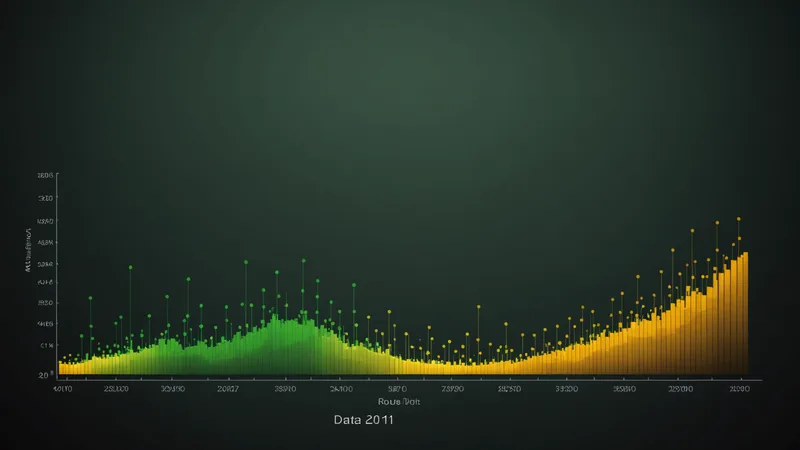
Vehicle energy consumption is more variable than fleet managers tend to expect when they first run electric delivery vans. The manufacturer's rated energy use per mile is a useful starting point, but it is derived from standardized drive cycles that bear limited resemblance to actual urban delivery operations. When we look at telematics data from EV delivery vans over extended operating periods, the route-to-route and vehicle-to-vehicle variability is substantial, and it has direct implications for how charge planning works.
This article describes what we see in vehicle energy consumption data across different route types, identifies the variables that drive the most variance, and explains why fleet-average figures cannot substitute for per-vehicle, per-route prediction when the goal is accurate charge planning.
Baseline Variability Is Larger Than Expected
A Class 3 electric delivery van rated at roughly 0.45 kWh per mile on a combined cycle will, in real-world urban delivery service, show actual consumption anywhere from 0.35 kWh to 0.65 kWh per mile depending on conditions. That is a range of nearly 2x between favorable and adverse operating conditions.
The most significant sources of variance, in rough order of effect magnitude, are ambient temperature and HVAC load, payload weight, stop density on the route, and terrain. Speed variability and driver behavior contribute, but for fixed urban delivery routes these are relatively stable factors compared to the others.
Consider a 60-mile route. At 0.45 kWh/mile, that vehicle returns with 27 kWh consumed from a 60 kWh usable pack, roughly 55% depth of discharge. At 0.60 kWh/mile under winter conditions with full payload, the same route requires 36 kWh, about 60% depth of discharge. For a 70-mile route variant in the same conditions, the vehicle consumes 42 kWh and returns with 30% state of charge remaining. These are not edge cases. They are normal winter operations for a mid-Atlantic or Midwest delivery fleet.
Temperature Effects: The Seasonal Factor
Lithium-ion battery packs in commercial EVs lose usable capacity at low temperatures, and the HVAC load required to maintain cabin comfort and battery thermal management adds draw year-round. The combined effect is measurable and seasonally predictable.
Battery capacity derating starts becoming noticeable below approximately 10 degrees Celsius (50 degrees Fahrenheit) and becomes significant below 0 degrees Celsius. At minus 10 degrees Celsius, typical pack capacity derating is in the 15 to 25 percent range depending on battery chemistry and thermal management system quality, with active thermal management recovering most of that. For a van with a 75 kWh gross pack, the usable capacity in harsh winter conditions may be closer to 55 to 60 kWh rather than the nominal 65 to 70 kWh.
Simultaneously, cabin heating draws 3 to 6 kW continuously during cold operation. On a six-hour route, that is 18 to 36 kWh of thermal load added to the traction energy draw. Combined, these effects mean winter routes consume meaningfully more energy than the same routes in mild weather. A charge planning model that does not account for season and forecast ambient temperature will systematically under-provision winter charges.
Payload Weight: The Variable That Gets Ignored
Delivery vans operate at variable load throughout a route. A van starting a morning route fully loaded at 2,000 kg cargo weight consumes more energy per mile in the first half of the route than in the second half, when it has made most deliveries and the payload is lighter. The energy difference between a fully loaded van and an empty return leg on the same road segments is measurable, typically in the 10 to 18 percent range on traction energy.
For charge planning purposes, the relevant number is route-level average payload, not vehicle gross weight capacity. A fleet where vehicles regularly run at 40% of maximum payload will show systematically lower energy consumption than one running routes at 80% or above. If payload data from dispatch or logistics systems is available, it can meaningfully improve per-route energy estimates. If it is not, using weight-class averages introduces a persistent bias that accumulates across the fleet.
Stop Density: Why Urban Routes Cost More Per Mile
Regenerative braking recovers a portion of kinetic energy on deceleration, but the physics of stop-and-go driving still penalizes energy efficiency. A route with 35 stops in 40 miles consumes considerably more energy per mile than a 60-mile route with 8 stops, even though the former covers less distance. The acceleration energy draw on each restart, even partially recovered on braking, is not fully recaptured, and the time spent at idle with accessories running adds to the per-mile cost.
Urban dense routes, particularly residential delivery zones with high stop counts, consistently show higher kWh per mile than suburban or light commercial routes with lower stop density. This is not a vehicle deficiency. It is a physical characteristic of stop-and-go operation that affects all vehicles and is amplified for heavier vans.
Stop count or stop density is generally available from route planning software. Using it as a feature in energy prediction models substantially improves per-route accuracy versus using only distance and vehicle class.
What Vehicle-Level Variation Means for Charge Planning
Fleet-average energy consumption figures are useful for procurement planning and budget forecasting at an aggregate level. They are not useful for per-vehicle charge planning in a constrained depot.
In a fleet of twenty vehicles, on any given day, half the vehicles will consume more than the fleet average and half will consume less. The ones above average are the ones that most need charge priority that evening. The ones below average are candidates for delayed or reduced charging that frees charger capacity and reduces demand peaks. A schedule built on fleet-average targets will consistently misallocate both charging capacity and overnight charge windows.
The practical implications become concrete in constrained charging environments. Consider a depot with sixteen vehicles and ten charging ports. Not all vehicles can charge simultaneously. The ten charging slots must be allocated, and when to start each vehicle's charge matters for both demand charge management and ensuring departure-ready SOC. Using accurate per-vehicle energy consumption to drive that allocation is the difference between a schedule that works and one that requires dispatcher overrides regularly.
Building Usable Prediction Models from Telematics
Good energy prediction at the route level does not require elaborate machine learning infrastructure. For a fleet with six months of telematics history, a model that conditions on route distance, stop count, ambient temperature forecast, and vehicle health state can achieve prediction error in the 8 to 12 percent range on next-day energy consumption. That is sufficient accuracy to meaningfully improve charge scheduling decisions.
The key data inputs are telematics SOC on arrival, GPS or odometer route distance, ambient temperature (current and forecast), and some measure of route type or stop count. Most fleet telematics platforms surface the first three. Stop count comes from route planning or delivery management software. Connecting these data streams is the main integration challenge, not the modeling itself.
We are not suggesting that telematics-based energy prediction replaces good fleet operations practice. Drivers who report unusual conditions, vehicles flagged for battery health anomalies, and routes diverted mid-day from the plan all require human judgment that no prediction model handles well. The model provides a baseline, and human judgment handles the exceptions. That is the correct division of labor, and it is what our dispatcher integration is designed to support.
The goal is not perfect prediction. It is narrowing the uncertainty band enough that charge scheduling decisions are based on realistic per-vehicle energy requirements rather than fleet averages or conservative buffers that keep every vehicle at 100% by morning regardless of what tomorrow's route actually requires.